 Skip to content
Closed-Cell SPF Insulation
Aaa Group
Closed-Cell SPF Insulation
High-performance closed-cell spray polyurethane foam insulation solutions for commercial, industrial, warehouse, and metal building applications.
Improve thermal performance, reduce unwanted air leakage, and support a more effective building-envelope strategy with an SPF system designed around your facility.
What Is Closed-Cell Spray Foam Insulation?
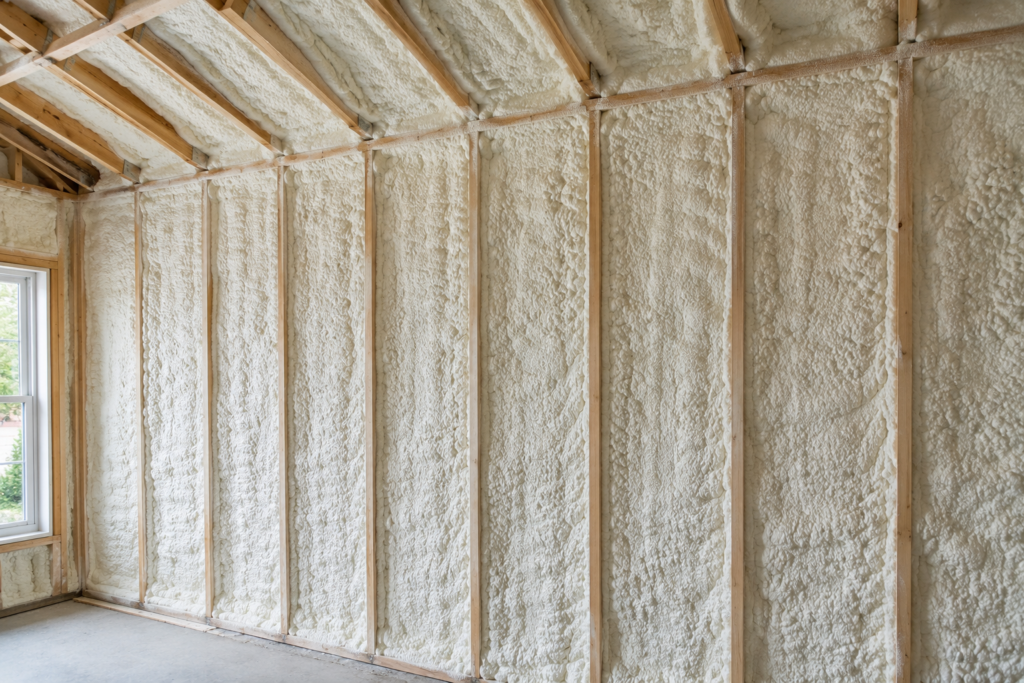
Closed-cell spray polyurethane foam is a dense, spray-applied insulation material whose cellular structure is predominantly closed. During application, the material expands and adheres to suitable substrates, creating a continuous insulation layer across appropriate building-envelope surfaces.
Closed-cell SPF can provide thermal insulation and air-control properties in commercial and industrial building assemblies. Its characteristics make it useful for many applications involving metal buildings, warehouses, manufacturing facilities, walls, ceilings, and other appropriate building-envelope areas.
The correct SPF product, thickness, and assembly design depend on the building, climate, substrate, code requirements, and project performance objectives.
Explore our complete SPF Insulation solutions to learn more about spray polyurethane foam applications for commercial and industrial buildings.
Closed-Cell vs. Open-Cell Spray Foam Insulation
Closed-cell and open-cell spray polyurethane foam have different physical characteristics and are selected according to the requirements of the building assembly and application.
Closed-cell SPF generally has a denser cellular structure and higher thermal resistance per unit thickness than open-cell foam. Open-cell SPF has a lower density and different performance characteristics.
For commercial and industrial projects, the appropriate foam type should be determined based on factors such as the building assembly, climate, moisture-control strategy, substrate, space limitations, code requirements, and project objectives.
| Feature | Closed-Cell SPF | Open-Cell SPF |
|---|---|---|
|
Structure |
Predominantly closed cells |
Predominantly open cells |
|
Density |
Higher |
Lower |
|
R-value per inch |
Generally higher |
Generally lower |
|
Air control |
Can provide at sufficient thickness |
Can provide at sufficient thickness |
|
Vapor behavior |
Lower vapor permeance |
More vapor permeable |
|
Selection |
Building-specific |
Building-specific |
Benefits of Closed-Cell SPF Insulation
When properly specified and installed, closed-cell spray polyurethane foam can provide several performance advantages for commercial and industrial building-envelope applications.
High Thermal Performance
Closed-cell SPF provides substantial thermal resistance within a relatively compact application, making it useful where insulation performance and available space are important considerations.
Air Leakage Control
Spray-applied SPF can help seal gaps and irregular areas, reducing unwanted air movement through appropriate portions of the building envelope.
Continuous Insulation
Closed-cell SPF conforms to many suitable substrates and geometries, helping create a continuous insulation layer across appropriate application areas.
Vapor Control Characteristics
Closed-cell SPF generally has lower vapor permeance than open-cell foam. Its role within the vapor-control strategy should be evaluated according to the specific building assembly and climate.
Conforms to Complex Surfaces
Because SPF is spray-applied, it can conform around many joints, penetrations, and irregular surfaces encountered in commercial and industrial buildings.
Building Envelope Performance
A properly designed closed-cell SPF system can contribute to the thermal and air-control performance of the overall building envelope.
Commercial Applications for Closed-Cell SPF Insulation
Closed-cell SPF can be considered for a variety of commercial and industrial building applications. The appropriate system should be selected according to the building construction, substrate, operating environment, climate, and project requirements.
Commercial Buildings
Closed-cell SPF insulation can be incorporated into appropriate commercial building-envelope assemblies where thermal insulation and air-control performance are required.
Metal Buildings
Closed-cell spray foam can conform to appropriate metal and steel building surfaces while supporting thermal insulation, air control, and properly designed condensation-management strategies.
Warehouses
Closed-cell SPF can be considered for appropriate warehouse walls, ceilings, metal surfaces, and other building-envelope applications requiring improved thermal and air-control performance.
Industrial Facilities
Closed-cell SPF solutions can support thermal and air-control strategies across appropriate manufacturing, production, industrial warehouse, and other industrial building applications.
Our Closed-Cell SPF Insulation Process
A successful closed-cell SPF project begins with understanding the building assembly, substrate, existing conditions, and performance objectives. AAA Enterprise Group follows a structured process from initial evaluation through application and final review.
Building Assessment
We evaluate the building assembly, existing insulation, substrate conditions, application areas, accessibility, and project performance requirements.
SPF System Selection
Based on the assessment, project objectives, and applicable requirements, we determine an appropriate closed-cell SPF approach for the facility.
Surface & Project Preparation
Application areas are prepared according to project requirements, including substrate preparation and protection of surrounding surfaces, equipment, and areas outside the application zone.
Professional SPF Application
Closed-cell spray polyurethane foam is professionally applied to specified areas according to the project’s design and application requirements.
Final Quality Review
The completed application is reviewed for coverage, consistency, and overall installation quality before the SPF project is finalized.

How Much Does Closed-Cell SPF Insulation Cost?
The cost of commercial closed-cell SPF insulation depends on project size, application area, required thickness, substrate conditions, accessibility, preparation requirements, building operations, and overall project complexity.
Because every commercial and industrial building is different, a professional assessment provides the best basis for developing an accurate project-specific estimate.
What Affects Closed-Cell Spray Foam Cost?
Application Area
total square footage being insulated.
Required Thickness
system design and thermal requirements.
Substrate Condition
cleaning, preparation or corrective work.
Existing Insulation
whether existing materials require removal or modification.
Accessibility
height, lifts, equipment and obstructions.
Project Logistics
occupancy, scheduling, ventilation and work-area requirements.
Request a Closed-Cell SPF Estimate
AAA Enterprise Group can evaluate your building, discuss your insulation and building-envelope requirements, and develop a project-specific SPF recommendation.
Faq
Closed-Cell SPF Insulation FAQs
Get answers to common questions about closed-cell spray polyurethane foam insulation for commercial buildings, warehouses, metal buildings, manufacturing facilities, and industrial properties.
What is closed-cell SPF insulation?
Closed-cell SPF insulation is a dense spray polyurethane foam that expands during application and adheres to suitable building surfaces. Its cellular structure is predominantly closed, allowing it to provide thermal insulation and air-control properties within appropriate commercial and industrial building assemblies.
Closed-cell SPF is commonly considered for walls, ceilings, metal buildings, warehouses, manufacturing facilities, and other commercial building-envelope applications.
What is the difference between closed-cell and open-cell spray foam?
Closed-cell and open-cell spray foam differ in density, cellular structure, thermal performance, and vapor permeability.
Closed-cell SPF generally provides higher thermal resistance per inch and lower vapor permeance than open-cell foam. Open-cell foam has a lower density and different moisture and acoustic characteristics.
The appropriate foam type depends on the building assembly, climate, substrate, moisture-control strategy, code requirements, and project objectives.
Is closed-cell spray foam suitable for commercial buildings?
Yes, closed-cell SPF can be suitable for many commercial building applications. It can provide continuous thermal insulation and help reduce unwanted air leakage through appropriate portions of the building envelope.
The building should be evaluated to determine the appropriate SPF system, application area, and required thickness.
Explore our Commercial SPF Insulation solutions for additional commercial building applications.
Can closed-cell SPF be used on metal buildings?
Closed-cell SPF can be used on appropriate metal and steel building surfaces when substrate conditions, preparation, product requirements, and installation conditions are suitable.
Because spray foam conforms to the surface where it is applied, it can support continuous insulation and air control while also contributing to a properly designed condensation-management strategy.
Learn more about Metal Building Spray Foam Insulation for commercial metal and steel building applications.
Is closed-cell spray foam good for warehouses?
Closed-cell SPF can be an effective insulation option for many warehouse applications, including appropriate walls, ceilings, metal surfaces, and other building-envelope areas.
It can help reduce heat transfer and unwanted air leakage while supporting improved thermal and air-control performance throughout the facility.
Explore our Warehouse Spray Foam Insulation solutions for warehouse-specific applications.
Can closed-cell SPF improve energy efficiency?
Closed-cell SPF can help reduce heat transfer and unwanted air leakage through insulated portions of the building envelope. This can support improved energy performance in conditioned commercial and industrial facilities.
Actual energy savings depend on factors such as the building design, existing insulation, HVAC system, climate, operating conditions, and scope of the SPF installation.
How much does commercial closed-cell spray foam insulation cost?
Commercial closed-cell SPF insulation costs vary according to the size of the application area, required foam thickness, substrate conditions, existing insulation, accessibility, surface preparation, building operations, and overall project complexity.
Because every commercial property is different, a professional building assessment is the best way to determine an accurate project-specific estimate.
REQUEST A CLOSED-CELL SPF ESTIMATE
How long does closed-cell SPF insulation last?
The service life of a closed-cell SPF insulation system depends on factors such as product selection, installation quality, substrate conditions, building environment, exposure, and maintenance.
Proper system selection and professional installation are important for supporting long-term performance.
Can closed-cell spray foam help with condensation?
When properly designed as part of the building assembly, closed-cell SPF can help manage surface temperatures and air movement that contribute to condensation conditions.
However, condensation and moisture management should be evaluated as part of the overall building-envelope design rather than assuming spray foam alone will solve every moisture problem.
Can closed-cell SPF be installed over existing insulation?
It depends on the type and condition of the existing insulation, substrate conditions, moisture concerns, building assembly, and project objectives.
Existing insulation should be evaluated before installation to determine whether it can remain in place or whether removal, repairs, or other corrective work are necessary.
Where can closed-cell SPF insulation be applied?
Depending on the building assembly and project requirements, closed-cell SPF can be considered for appropriate walls, ceilings, metal surfaces, roof assemblies, warehouses, manufacturing facilities, industrial buildings, and other commercial building-envelope applications.
A professional assessment can determine which areas of the building are appropriate for SPF insulation.
For manufacturing and production facilities, explore our Industrial SPF Insulation solutions.
How do I know if closed-cell SPF is right for my building?
The appropriate insulation system depends on the building assembly, existing conditions, substrate, climate, moisture-control strategy, applicable requirements, and project performance objectives.
AAA Enterprise Group can evaluate your commercial or industrial facility and help determine whether closed-cell SPF is appropriate for the application.
REQUEST A CLOSED-CELL SPF ASSESSMENT
Commercial Closed-Cell SPF Insulation Service Areas
AAA Enterprise Group provides closed-cell SPF insulation solutions across our commercial service areas for qualifying warehouses, metal buildings, manufacturing facilities, industrial properties, and other commercial buildings.
Our team works with property owners, facility managers, and commercial building professionals to evaluate insulation requirements and develop building-specific SPF solutions.
Find the Right SPF Insulation
Solution for Your Building
Every commercial and industrial facility has different insulation and building-envelope requirements. The right solution begins with understanding the building, existing conditions, and performance objectives.
AAA Enterprise Group can evaluate your property and help determine whether closed-cell spray polyurethane foam is appropriate for your facility.
OUR COMMITMENT
WHAT YOU CAN EXPECT FROM AAA ENTERPRISE GROUP
WE'RE LOCAL
We are a local, family-owned and operated company dedicated to our community.
CLIENT FOCUSED
We aim not only to give you the best possible roof, but to provide you with a smooth and stress-free experience.
EXPERT CONTRACTORS
Our culture of continuous learning and training helps us provide first class products and installation on every project.
